


Florida Nature Coast Guide: Hidden Gem of the Sunshine State
Watch manatees from a boardwalk, swim in freshwater springs, or spend a morning scalloping on Florida’s Nature Coast.
You can follow the coast from Pasco County to Wakulla for island beaches, spring-fed rivers, fishing towns, and wildlife refuges.
Use this guide to choose where to go, what to do, and whether to stay in one town or plan a road trip.
Your Route Through the Nature Coast
- Where Is the Florida Nature Coast?
- Springs, Parks, and Wildlife Worth Visiting
- Pasco County: Coastal Paddling and Anclote Key
- Ellie Schiller Homosassa Springs Wildlife State Park: The Reliable Sighting
- Three Sisters Springs: Where You Can Get in the Water
- Weeki Wachee Springs State Park: Mermaid Shows and Spring Swimming
- Chassahowitzka River: Quiet Paddling Beside a Wildlife Refuge
- Crystal River Preserve and Archaeological State Parks: Your Land Day
- Rainbow Springs State Park: A Full Day Just Inland
- Levy County: Cedar Key and Manatee Springs
- Dixie County: Suwannee, Horseshoe Beach, and the Refuge
- Taylor County: Steinhatchee and Keaton Beach
- Jefferson County: Wacissa River and Aucilla Sinks
- Wakulla County: Wakulla Springs and St. Marks
- Where to Stay on Florida’s Nature Coast
- Best Time to Visit the Florida Nature Coast
- Boating and Paddling on the Nature Coast
- Florida Nature Coast FAQs
- Booking Your Stay on the Homosassa River

Where Is the Florida Nature Coast?
The Florida Nature Coast extends from Pasco County, north of Tampa Bay, to Wakulla County in the Big Bend.
Its eight counties, from south to north, are Pasco, Hernando, Citrus, Levy, Dixie, Taylor, Jefferson, and Wakulla.
The drive from Tampa to Homosassa takes roughly 75 to 90 minutes, depending on your starting point and traffic.
The drive from Orlando to Homosassa takes roughly 1 hour 45 minutes. Allow extra time during busy travel periods.
Homosassa and Crystal River are in Citrus County, in the southern part of the region. They are great bases for nearby attractions, but not for the entire coast.
Choose a section for a short stay, or change bases as you travel north. Here is how the eight counties fit together:
- Pasco: coastal paddling around New Port Richey and boat trips to Anclote Key.
- Hernando: Weeki Wachee Springs, river paddling, and Pine Island’s small Gulf beach.
- Citrus: Homosassa, Crystal River, Three Sisters Springs, and Chassahowitzka River trips.
- Levy: Cedar Key’s islands and waterfront, plus Manatee Springs near Chiefland.
- Dixie: the lower Suwannee River, Suwannee, and Horseshoe Beach.
- Taylor: Steinhatchee and Keaton Beach for Gulf fishing and seasonal scalloping.
- Jefferson: Wacissa River paddling and the Aucilla River landscape.
- Wakulla: Wakulla Springs, St. Marks National Wildlife Refuge, and the coast south of Tallahassee.
For a cycling stop between the coastal towns, the Nature Coast State Trail connects communities around the lower Suwannee River.
Its 32 paved miles connect Cross City, Fanning Springs, Trenton, and Chiefland. The route crosses the Suwannee River on an old railroad trestle near Old Town.
The coastal edge here is salt marsh, mangrove islands, and shallow seagrass flats, so most swimming happens in the rivers and springs.
Two small sandy beaches still give you Gulf shoreline. Fort Island Gulf Beach in Citrus County and Alfred A. McKethan Pine Island Park in Hernando County are both county run.
Come for spring swimming, wildlife viewing, paddling, and small coastal towns. Popular springs and boat ramps can be busy, especially on weekends.
If you want a beach resort or nightlife, compare other destinations. Our guide to off-the-beaten-path Florida covers more alternatives across the state.
Springs, Parks, and Wildlife Worth Visiting
Choose stops by activity and location. The southern counties offer spring swimming and manatee viewing; farther north, allow time for island towns, river trips, and coastal refuges.
Pasco County: Coastal Paddling and Anclote Key
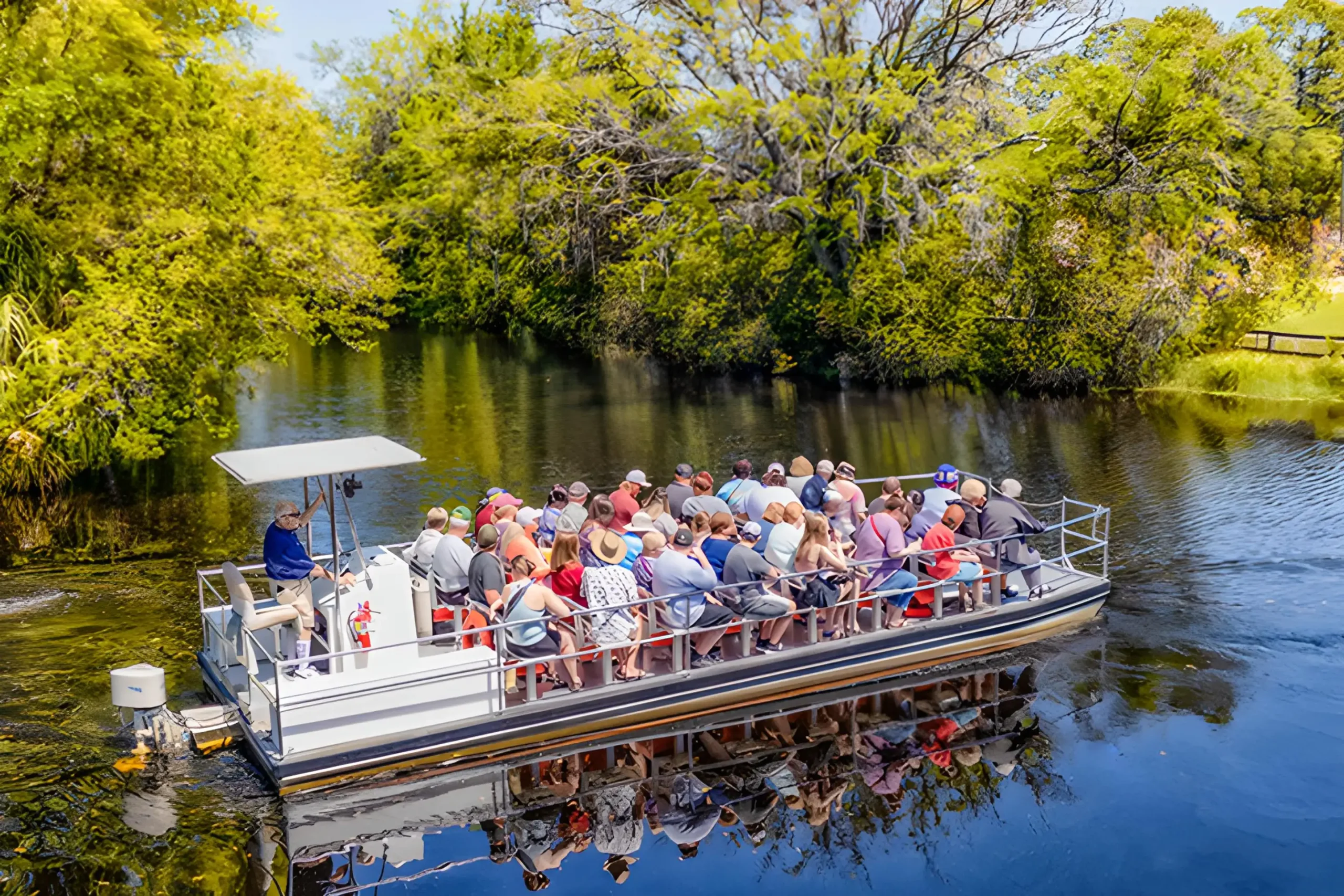
Near New Port Richey, Werner-Boyce Salt Springs State Park offers kayaking, nature trails, and birdwatching along a marshy coastline.
For a beach day, Anclote Key Preserve State Park has sandy island shores reached by private boat or ferry. Arrange transportation before visiting.
Best for: coastal paddling, birds, and an island beach trip.
Planning: choose a sheltered paddle for a first outing; an open-water crossing to the islands requires different preparation.
Ellie Schiller Homosassa Springs Wildlife State Park: The Reliable Sighting
Boardwalks pass native wildlife exhibits, and the Fish Bowl underwater observatory lets you see below the spring’s surface without getting in the water.
Best for: families, grandparents, anyone who wants the view without the water
Access rule: no swimming anywhere in the park
Cost: admission is approximately $13 for ages 13 and up, $5 for ages 6 to 12, and free for kids 5 and under.
The visitor-center tram is included. The Pepper Creek boat ride costs extra and may pause during low water, so check its status before visiting.
Three Sisters Springs: Where You Can Get in the Water
A Three Sisters Springs boardwalk ticket is for land-based viewing. To swim or paddle to the springs, you need separate water access from Kings Bay.
Paddling: paddlecraft may enter the springs April 1 through November 14.
Swimming: access depends on posted sanctuary restrictions and temporary closures, especially during cold weather. Check current access rules before setting out.
Getting there: launch at Hunter Springs Park or Kings Bay Park and paddle to the spring run. No water access is available from the boardwalk. Watch wildlife without disturbing it; see our guide to where to see manatees in Florida for viewing tips.
Weeki Wachee Springs State Park: Mermaid Shows and Spring Swimming
Performers put on underwater mermaid shows inside a first-magnitude spring fed by one of the deepest freshwater cave systems in the country.
Best for: families, though the water slides and lazy river run on a seasonal schedule
Access rule: swimming is at Buccaneer Bay, the park’s spring-fed water park, and not in the main spring where the shows run
Planning: arrive near opening. The park stops admitting visitors once it reaches capacity and stays closed to new arrivals for the day.
The free Friends of Weeki Wachee app posts capacity updates. Check before making the drive.
Chassahowitzka River: Quiet Paddling Beside a Wildlife Refuge
The Chassahowitzka River, often called the Chaz, borders a national wildlife refuge. Its tributary creeks offer paddling routes through marsh and forest.
Best for: paddlers and wildlife photographers
Planning: our Chassahowitzka River kayaking guide covers launch details and paddling routes.
Harder part: the braided tributary creeks, with swamp banks, shallow water, and downed trees
Crystal River Preserve and Archaeological State Parks: Your Land Day
These are two separate parks, not one. The preserve holds hiking trails and paddle launches across a wide stretch of estuary.
Best for: hiking, birdwatching, and local history
Worth knowing: the archaeological park protects a pre-Columbian ceremonial site and its Native American mounds
Rainbow Springs State Park: A Full Day Just Inland
Rainbow Springs is near Dunnellon in Marion County, inland from the coastal counties covered here.
Best for: families wanting a full day inland
What you get: swimming at the headsprings, ornamental gardens, and seasonal tubing from a separate entrance downstream. Reserve headsprings day-use admission before visiting.
Levy County: Cedar Key and Manatee Springs
Cedar Key offers salt-marsh paddling, an island waterfront, and local history. Cedar Key Museum State Park has a nature trail leading to a canoe and kayak launch.
Near Chiefland, Manatee Springs State Park offers spring swimming, trails, and a boardwalk through cypress forest. Manatees may appear during colder months.
Best for: combining a coastal town with an inland spring visit.
Planning: treat Cedar Key and Manatee Springs as separate stops. Check each park’s notices before visiting.
Dixie County: Suwannee, Horseshoe Beach, and the Refuge
Suwannee and Horseshoe Beach suit fishing and coastal paddling trips. Despite its name, Horseshoe Beach is better approached as a fishing destination than a sandy swimming beach.
Lower Suwannee National Wildlife Refuge adds birdwatching, hiking, and wildlife photography. The Dixie Mainline provides access on the river’s Dixie County side.
Best for: river and Gulf fishing, wildlife photography, and refuge outings.
Planning: refuge roads are unpaved. Check road conditions and access notices before setting out.
Taylor County: Steinhatchee and Keaton Beach
Steinhatchee and Keaton Beach are bases for Gulf fishing and seasonal scalloping. Pick your destination around the launch or charter you plan to use.
For a river outing, consider paddling the Steinhatchee River or visiting Econfina River State Park. Check launch conditions and choose a route suited to your experience.
Best for: a fishing or scalloping stay with time for paddling.
Planning: scalloping dates differ by management zone. Do not apply the Citrus County season to a Taylor County trip.
Jefferson County: Wacissa River and Aucilla Sinks
The Wacissa River offers spring-fed paddling, while the Aucilla Sinks Trail follows a landscape where the river disappears underground and resurfaces.
The upper Wacissa is the gentler paddling option. Lower-river routes and the connecting Slave Canal require more experience; water levels affect the trip.
Best for: paddlers and hikers interested in rivers, springs, and limestone terrain.
Planning: check Aucilla access and hunt information before hiking. Some roads require four-wheel drive.
Wakulla County: Wakulla Springs and St. Marks
At Wakulla Springs, guided riverboat tours offer a chance to see wading birds, alligators, and other wildlife. Swimming is limited to the designated area.
At St. Marks National Wildlife Refuge, follow Lighthouse Road and stop for birdwatching and wildlife photography along the way.
Best for: wildlife viewing by boat and by car, with a spring-swimming stop.
Planning: reserve riverboat tickets ahead. Tours depend on weather, and wildlife sightings are never guaranteed.
Where to Stay on Florida’s Nature Coast
Choose your base around the part of the coast you want to explore. A Homosassa stay suits southern attractions; northern stops are better combined with another overnight base.
- Pasco and Hernando: look around New Port Richey or Spring Hill for trips centered on Werner-Boyce and Weeki Wachee.
- Citrus: choose Homosassa or Crystal River for manatee viewing, springs, and Gulf outings.
- Levy: consider Cedar Key for the waterfront or Chiefland for inland springs and the Nature Coast State Trail.
- Dixie and Taylor: compare Suwannee, Horseshoe Beach, Steinhatchee, and Keaton Beach around your fishing or paddling plans.
- Jefferson and Wakulla: compare the Monticello, Crawfordville, and St. Marks areas based on the rivers and parks you want to visit.
For a southern Nature Coast stay, Homosassa and Crystal River are about 10 miles apart. This comparison can help you choose between them.
| Homosassa | Crystal River | |
|---|---|---|
| Character | Working fishing village | More developed visitor hub |
| Best for | Fishing and boating, quiet water | First-timers, tour-based trips |
| Springs and manatee access | Wildlife park and river launches | Kings Bay, Three Sisters, most tour docks |
| Lodging and dining | Smaller, waterfront seafood spots | Wider choice, more walkable |
| Families and retirees | Space, slower pace, river days | Restaurants and activities close together |
Choose Crystal River for access to Kings Bay and Three Sisters Springs, or Homosassa for riverfront stays and fishing. Compare lodging and activities in our Homosassa vs. Crystal River guide.
Best Time to Visit the Florida Nature Coast
What will be your main activity? Winter suits spring-based manatee viewing; summer brings scalloping in designated zones. Paddling, hiking, and birdwatching depend on local weather and access.
The coast stretches across several counties, so conditions and crowds vary. Use this seasonal overview, then check the rules for your destination.
| Months | Weather and water | Crowds | What's in season |
|---|---|---|---|
| November through March | Cool, dry air, and springs that stay warm while the Gulf cools off | Busiest | Manatee season, November 15 through March 31 |
| April through June | Warming weather; afternoon storms become more likely toward summer | Moderate | Paddlecraft access to Three Sisters Springs resumes April 1 |
| July through September | Hot, humid, afternoon storms | Busy weekends | Scalloping in designated Gulf zones; dates and limits vary. Check FWC rules for the county and waters you plan to visit. |
| October | Warm conditions; tropical storms remain possible | Usually quieter | Fall fishing, manatees starting to move in |
October can suit fishing and paddling, but it is still hurricane season. Watch the forecast and check cancellation policies before booking.
Our Homosassa fishing guide covers local fishing options. For concentrated manatee viewing, plan around winter cold fronts.
Homosassa, Crystal River, Steinhatchee, and Keaton Beach are options for scalloping trips. Check FWC’s zone-specific seasons and limits before booking; dates are not coastwide.
If you choose Citrus County, our scalloping in Homosassa guide covers local trip planning.
Boating and Paddling on the Nature Coast
The Nature Coast offers river paddles and Gulf outings with different conditions. Check tides, weather, launch access, and route difficulty before choosing where to go. Use appropriate flotation and supervise children closely.
Before you launch:
- Check the tide before you head out
- Check the ramp’s payment method and parking arrangements before arriving
- Stay inside the marked channel
The Homosassa River boating guide covers launches, navigation, and rock hazards. Check current charts and conditions before heading out.
Worth knowing: a reserved slip can reduce daily launching and retrieval. Check slip availability and boat-size limits before booking.
Florida Nature Coast FAQs
Does the Florida Nature Coast have beaches?
Yes. Options include boat-access beaches at Anclote Key, Fort Island Gulf Beach in Citrus County, and Alfred A. McKethan Pine Island Park in Hernando County.
Much of the coast is marsh rather than sandy shoreline. Check access and swimming conditions at the specific beach you plan to visit.
When is manatee season on the Nature Coast?
Winter is the main season for spring-based manatee viewing. In the Crystal River area, the designated manatee season runs November 15 through March 31.
Sightings depend on temperature and location. Our Homosassa manatee season guide explains how cold fronts affect local viewing.
How much does a manatee tour cost?
Prices vary by operator and tour type. As one example, River Ventures lists its group manatee swim tour from $64 per person. Check current pricing and included equipment before booking.
Do you need a boat to enjoy the Nature Coast?
No. State parks, boardwalks, spring swimming, and guided tours all work without one. A boat adds range on the rivers and scallop flats.
How many days do you need on the Florida Nature Coast?
Plan two or three days for one area, such as Citrus County or Wakulla. For a broader road trip, allow about a week and use multiple bases.
That is a suggested pace, not enough time to visit every attraction. Choose a few priorities rather than trying to cover all eight counties in a weekend.
Booking Your Stay on the Homosassa River
If your Nature Coast route includes Citrus County, Homosassa can be your southern base. Plan a separate stay farther north for the Suwannee, Steinhatchee, or Wakulla.
- Choose the counties and activities you want to include before booking
- Use Homosassa for southern stops and another base for the northern coast
- Book a base with direct water access if you are bringing a boat
Browse our Homosassa vacation rentals for your dates. Boat slips are available as an option with select homes; confirm availability and size limits for your boat.


